

























































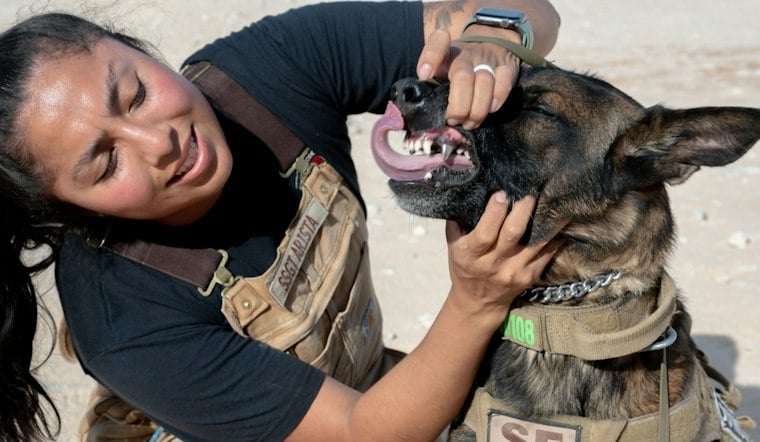
A Texas-based startup called Warhound has emerged from stealth mode with $200 million in funding to clone and genetically engineer dogs for the U.S. military, police departments, and emergency-response teams. The company, founded by Colossal Biosciences chief executive Ben Lamm and Anduril Industries founder Palmer Luckey, is betting that lab-engineered Belgian Malinois and German Shepherds can outperform the dogs the Pentagon currently relies on.
The funding round values Warhound at $1.2 billion, according to TechCrunch, with backers including Sequoia, 8VC, Corner Ventures, and In-Q-Tel. Warhound outlined the venture in a release last Friday, and the company says it expects to sell its dogs to first responders, the Department of Defense, military service groups, and police forces. Lamm, who also leads the de-extinction company Colossal Biosciences, said in the release, “Every day, we ask dogs to put their lives on the line to protect ours.”
Warhound's pitch centers on a problem the company itself has identified: more than 80% of U.S. military working dogs currently come from Europe, and less than half of them are judged fit for service, per the same TechCrunch report. The startup wants to flip that equation by breeding and gene-editing dogs domestically, reducing reliance on overseas suppliers.
Cloning Meets Gene Editing
The company's approach blends two distinct processes. Viagen, a Colossal-owned company, will partner with Warhound to clone the dogs, while separate genetic modifications will be layered onto the cloned embryos. The Food and Drug Administration notes that cloning and genetic engineering are not the same thing: genetic engineering involves adding, removing, or modifying genes, while cloning itself does not change an animal's gene sequence, according to the U.S. Food and Drug Administration.
Warhound has already biobanked genetic material from a group of elite service dogs, including Belgian Malinois and shepherds, Lamm told Scientific American. The company intends to make several genetic modifications in its cloned embryos to make the dogs healthier, stronger, and better workers, per the same report. Warhound is expecting its first litters in early 2027.
The team studied top-performing working-dog breeds — the Belgian Malinois and German Shepherd — and the planned changes go beyond cosmetic tweaks. The article notes the company is weighing enhancements for health, longevity, speed, and agility, along with sharpened olfactory sensors for bomb sniffing. Warhound would also target inherited health problems, including vision loss and hip dysplasia, as part of its broader goal of improving the dogs' health and performance.
Anduril's Role and the Tech Stack
Anduril, the defense technology company Luckey founded, holds no ownership stake in Warhound but will collaborate with the startup on technology. Anduril plans to provide software and hardware, such as protection vests and goggles, for the dogs and their handlers, the report states. Warhound is also considering equipment applications including protective armor and technology to share information with handlers, with gear designed to sit on the dogs rather than inside their bodies. Colossal, meanwhile, licenses technology to Warhound and holds an ownership stake in the company, with Lamm serving on Warhound's board. David Spirk is Warhound's chief executive.
Research on cloned service dogs offers some basis for the company's bet: cloning service dogs has been shown to produce puppies that retain many of the same desirable traits as the originals, Scientific American reports. Separately, research published on PMC has suggested, based on studies of cloned drug-detector dogs and cloned beagles, that working-dog temperaments can be influenced by genetic factors — though that research is described as limited.
Scientific and Ethical Uncertainty
Not everyone is convinced the plan will go smoothly. Experts warned Scientific American that Warhound's proposed genetic optimization would be highly unlikely to succeed without many failures and defects along the way. The company says it is working under the guidance of the American Humane Society to help certify its training program, and the organization is also expected to support retirement arrangements for the dogs, which could include reuniting them with former handlers or assisting with adoptions, according to the Dallas Express.
Military working dogs already handle a wide range of duties beyond bomb detection, including area security, movement and mobility support, law enforcement, and detecting drugs, people, landmines, firearms, and ammunition, according to U.S. Army guidance. The Defense Department's existing Military Working Dog Breeding Program supplies roughly 13% of the military's working-dog population, producing an estimated 50 to 90 Belgian Malinois and Dutch Shepherd puppies a year, per research on PMC — a small fraction of the force Warhound hopes to eventually supply.
Lamm's interest in genetic engineering predates Warhound. He previously collaborated with geneticist George Church on an effort to develop an elephant with woolly mammoth traits through Colossal Biosciences. Axios describes Warhound as likely the first defense technology business focused on genetically enhanced working dogs with cybernetic boosts, a framing that underscores how untested this corner of the defense-biotech market remains heading into 2027.





